-
![Decorative box with intricate wood carvings and a gold emblem in the center, likely containing chocolates.]()
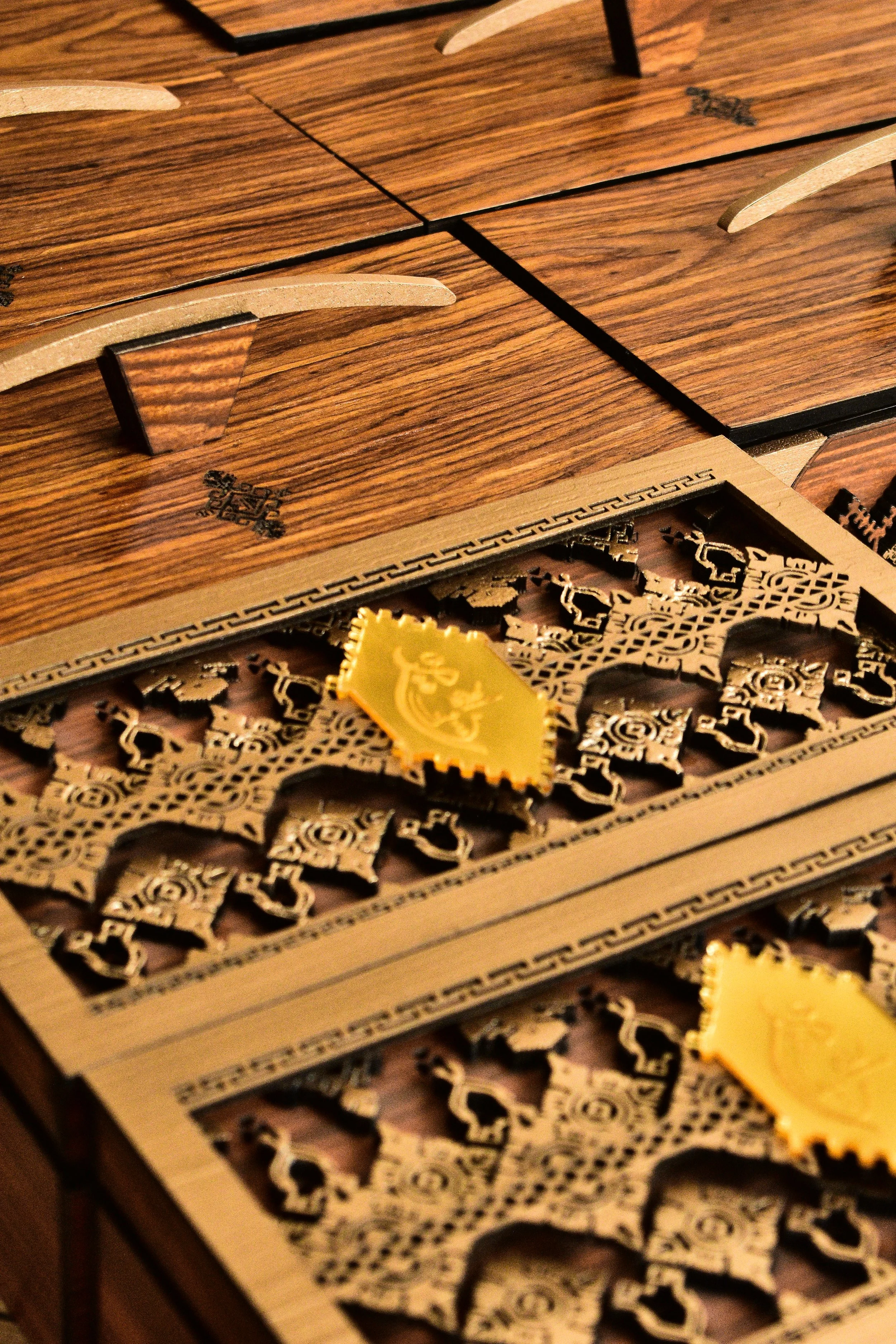
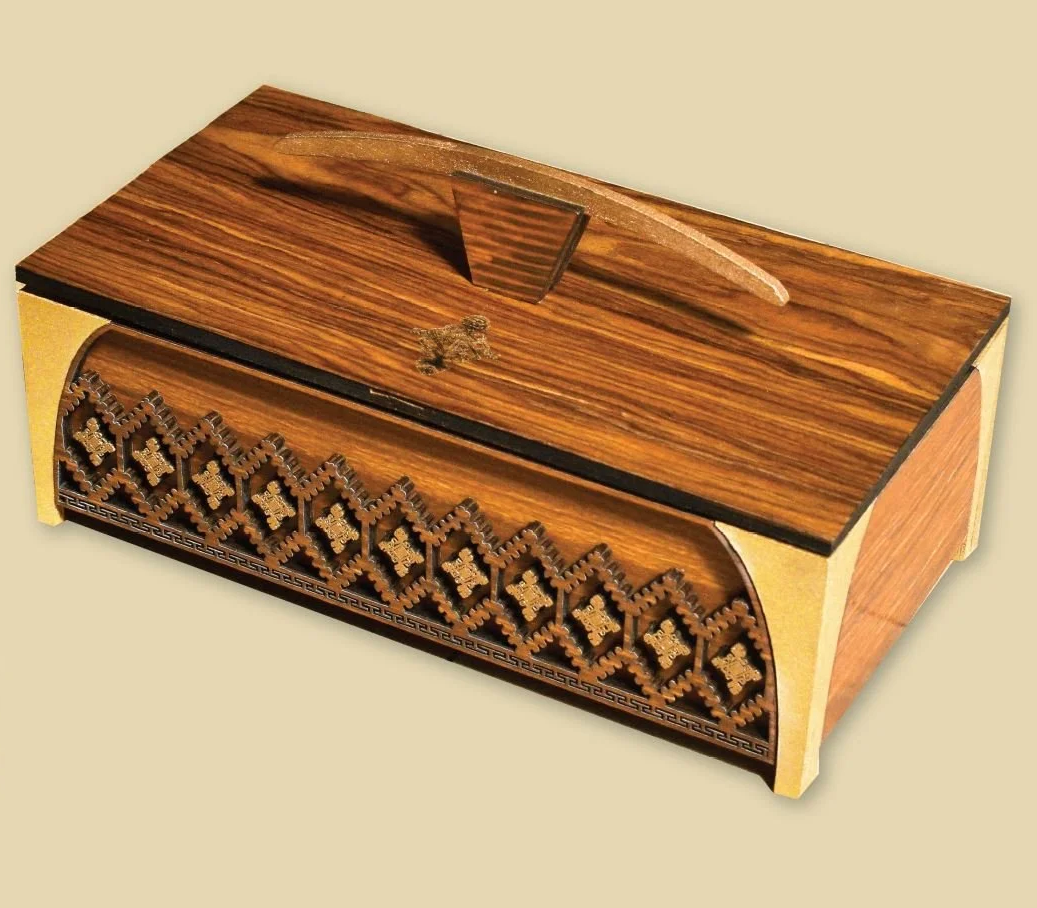
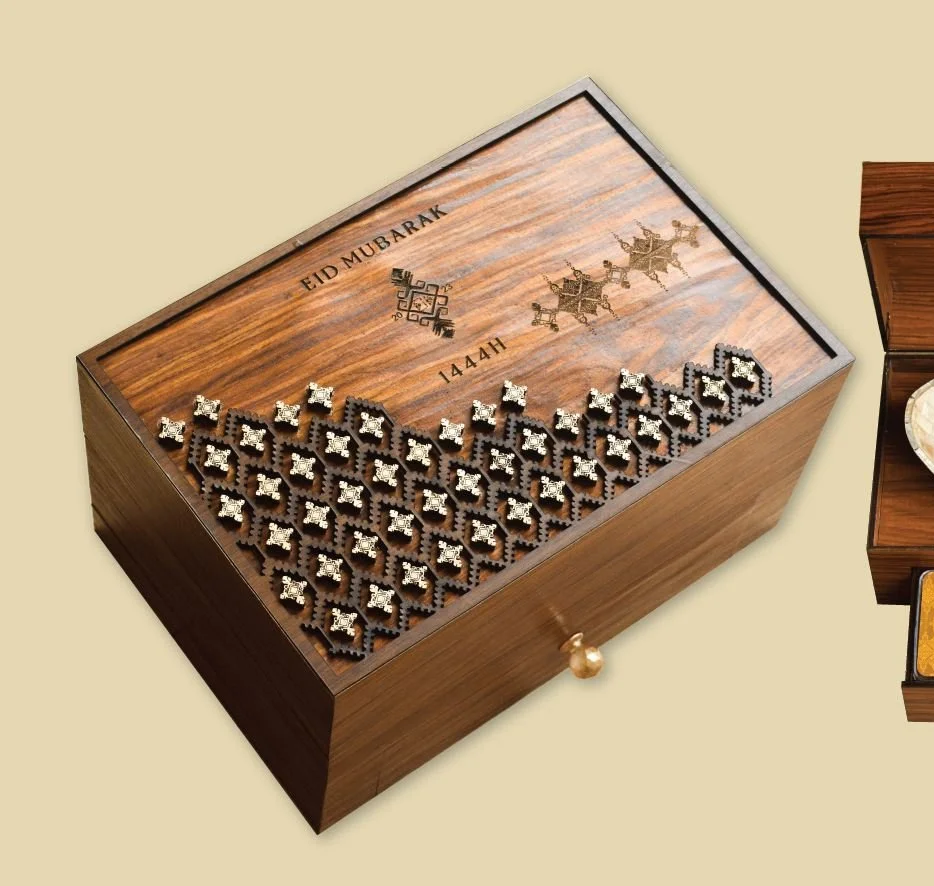
Eid Hampers 2023 Edition "Subahnale"
In Sasak’s folk etymology, or a story that develops in society, Subahnale weaving comes from the expression 'Subhanallah', an expression of the holy name of God which is usually expressed by Muslim communities of the Sasak people in Lombok.
It is often expressed by local people when they see how beautiful Subahnale Weaving is.
-
![Close-up view of a wooden chessboard with intricately carved details and gold-colored chess pieces, specifically the 'king'.]()
-
![A decorative wooden box with intricate geometric carvings on the front panel and a wooden lid with a small mirror and a wooden stick on top.]()
-
![Close-up of intricately carved wooden chess pieces with a geometric and decorative pattern on a wooden surface.]()
-
![A wooden box with a sliding lid, containing jewelry or decorative pieces arranged in a grid pattern. The box is on a beige surface and has inscriptions on the lid that read "EID MUBARAK 1444H" and images of camels.]()


-
![Wooden Eid greeting card with crescent moon and star design, and the words 'Eid Mubarak' in the center.]()
Eid Hampers 2022 Edition "Iftar"
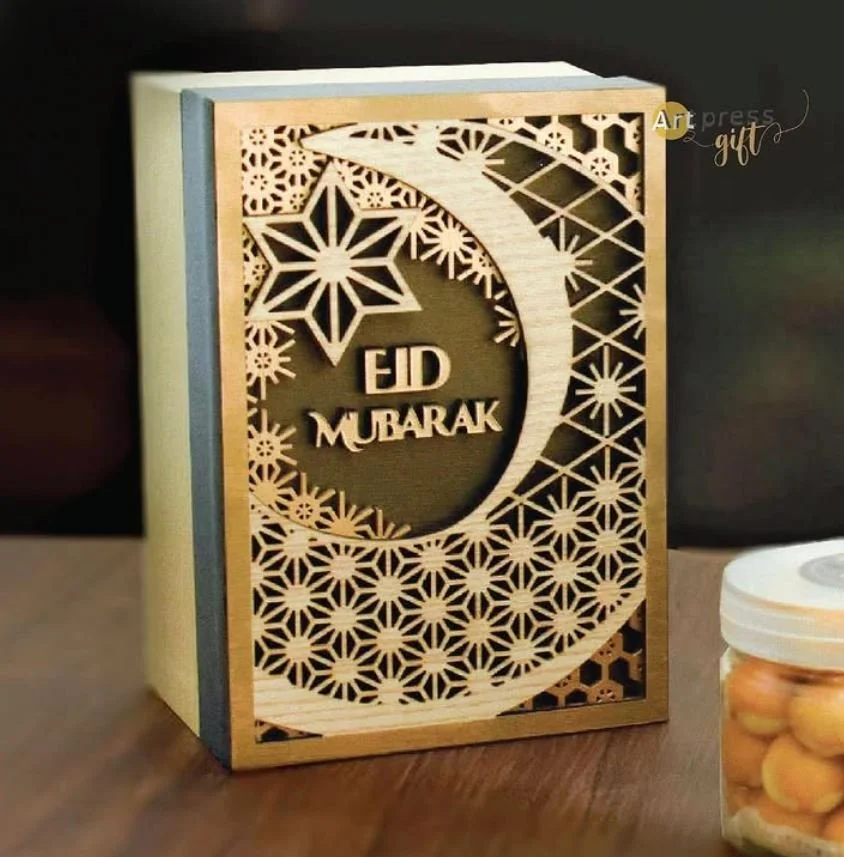
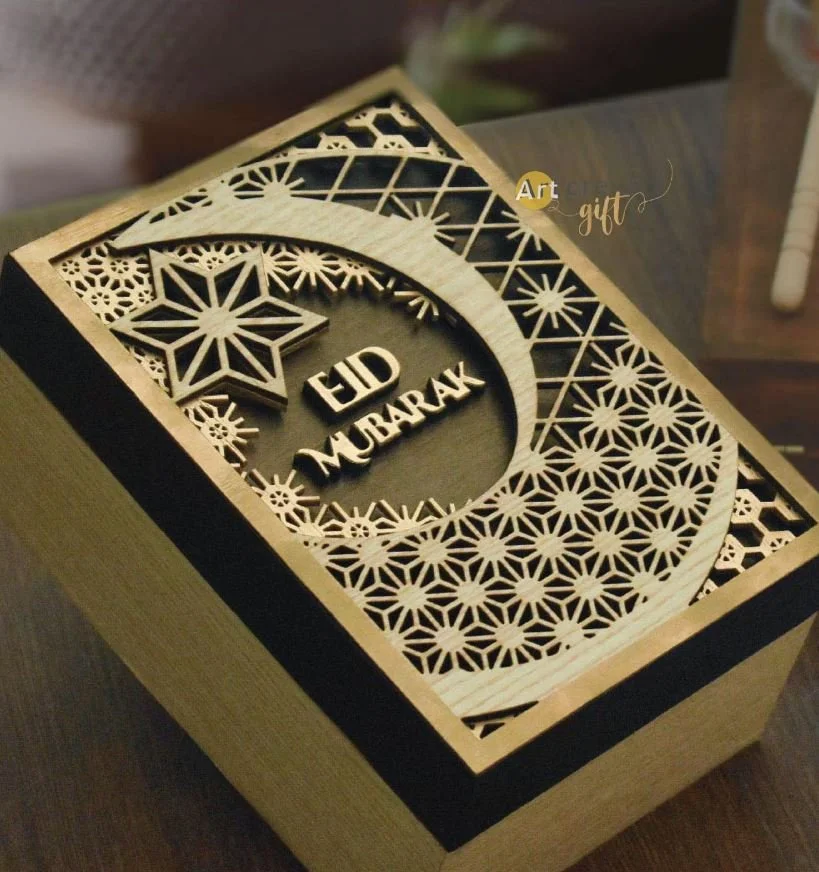
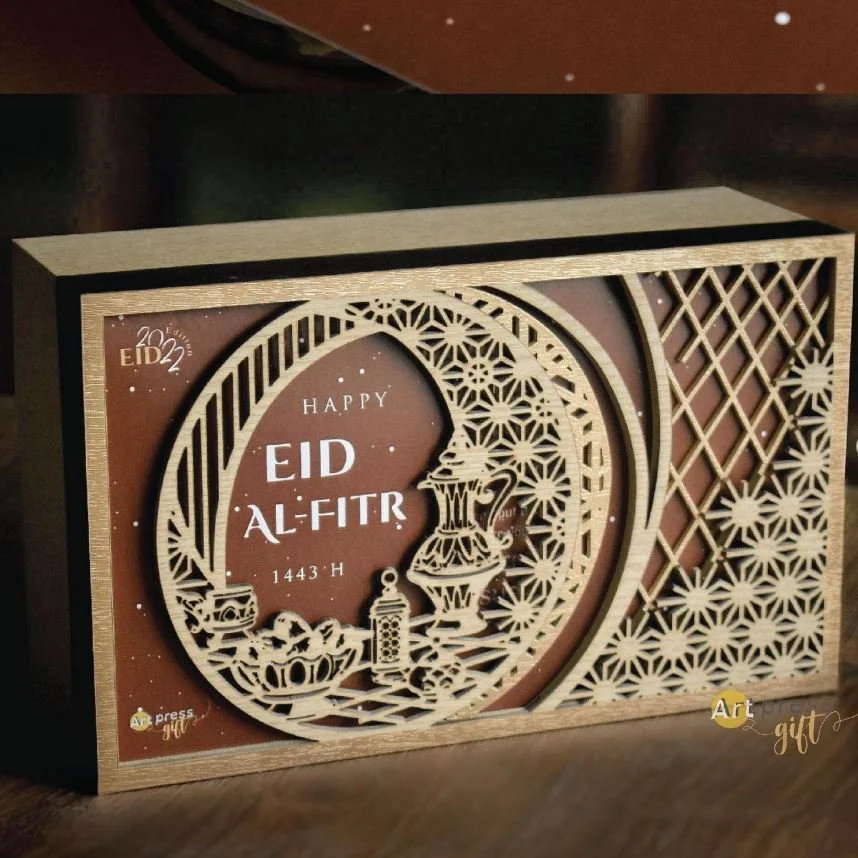
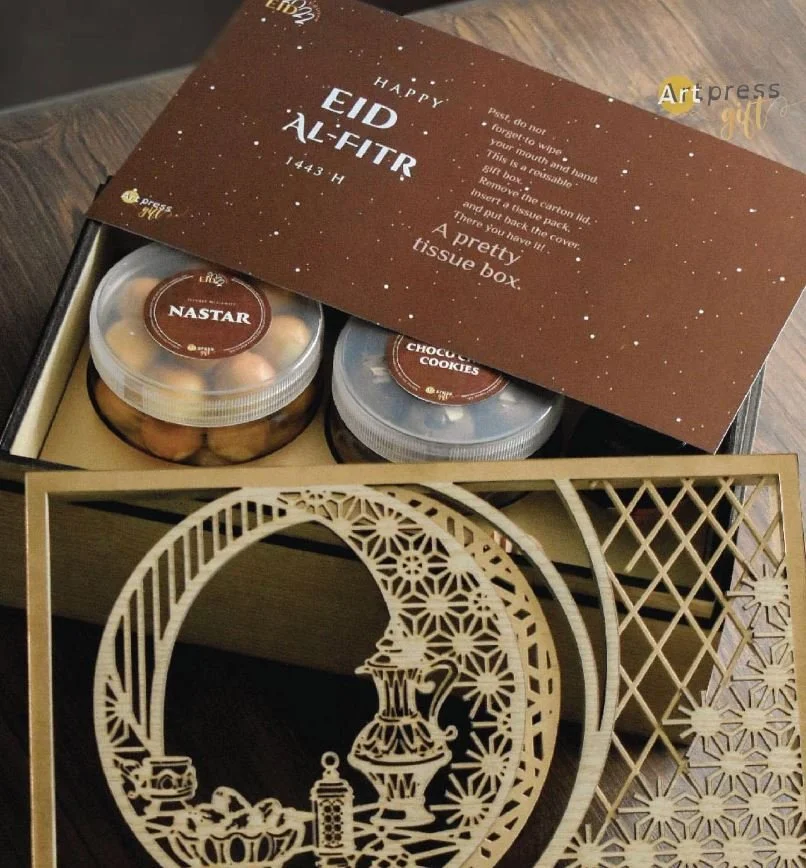
This year’s design draws inspiration from Kumiko, one of Japan’s oldest woodworking arts. Kumiko is a meticulous joinery technique that emphasizes aesthetics and intricate detail within its complex patterns. When combined, these various motifs come together to form a visual story.
While the concept Iftar refers to a series of rituals during Ramadan, when people gather to break their fast.Adapting the Kumiko technique, we translated three popular takjil enjoyed during Iftar into Kumiko-style elements. These three motifs are then arranged to form a visual narrative.
-
![Decorative wooden box with intricate Islamic geometric patterns, a crescent moon, star, and the words "Eid Mubarak" for Eid celebration.]()
-
![Decorative wooden box with intricate cutout design featuring a crescent moon, lantern, and star patterns, celebrating Eid al-Fitr with the message "Happy Eid Al-Fitr" and Islamic motifs.]()
-
![A gift box with a decorative outer frame featuring a crescent moon, lantern, and star patterns. Inside the box are two containers labeled 'NASTAR' and 'CHOCOLATE COOKIES'. The box lid has text wishing a Happy Eid-al-Fitr and instructions for reuse.]()
-
![Decorative wooden box with an intricate cut-out design on the top, showing a miniature mosque and the phrase 'ALIF.' The box contains colored balls and is placed on a woven mat near some greenery.]()
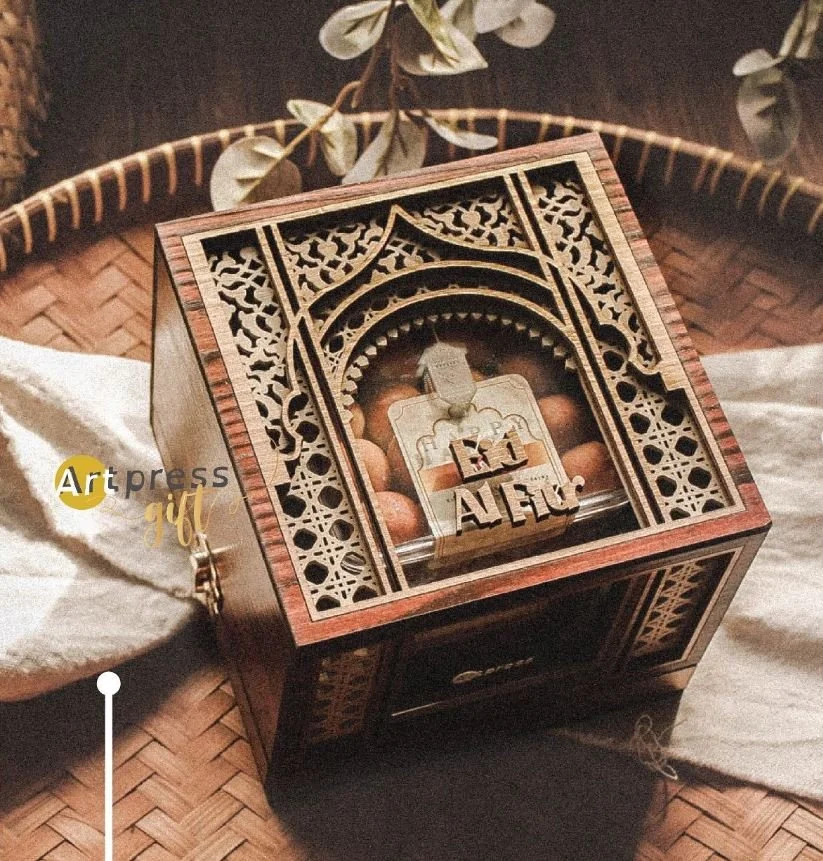
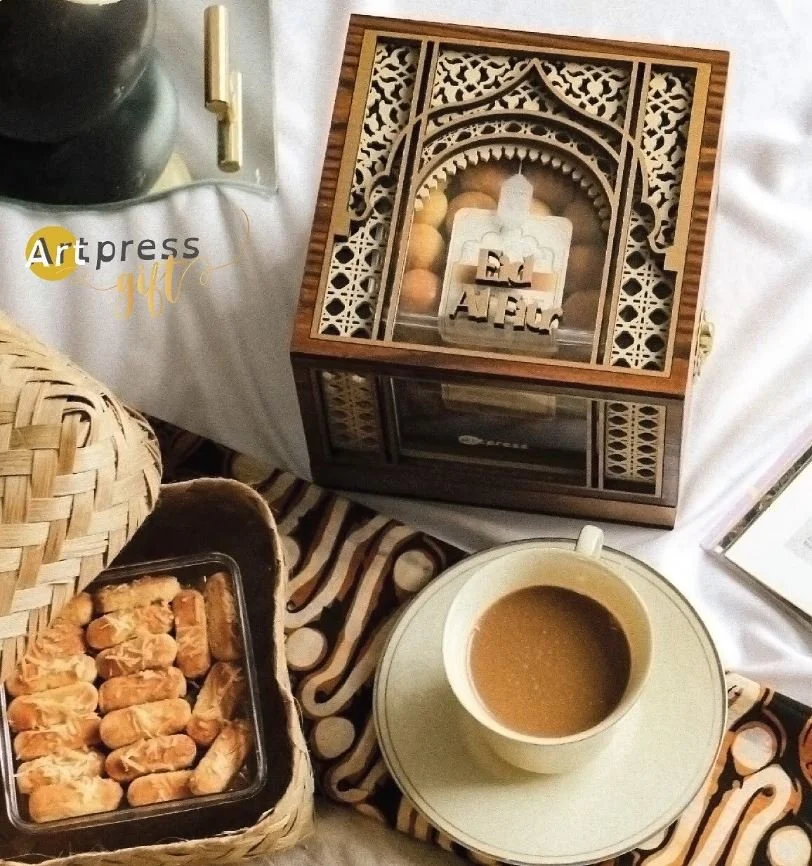
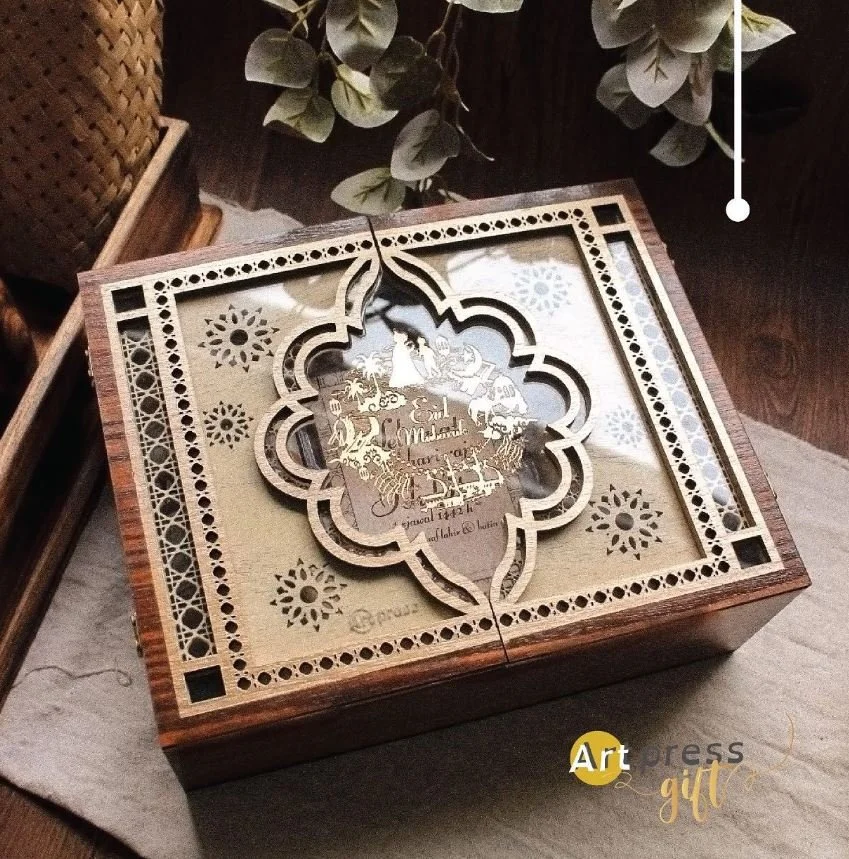
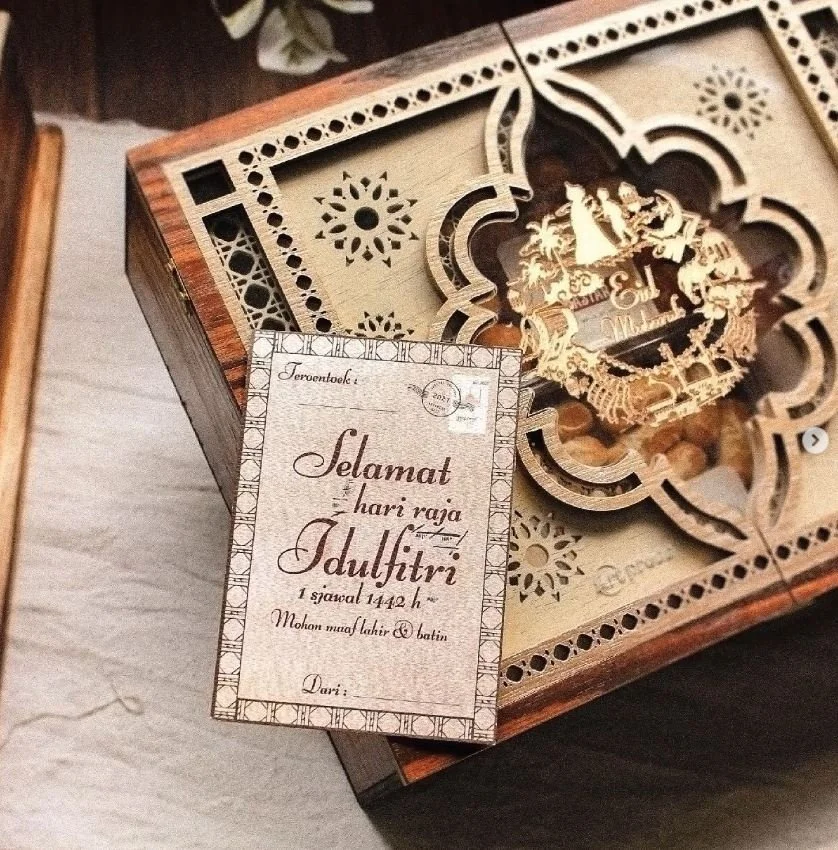
Eid Hampers 2021 Edition "Poelang Keroemah"
This Lebaran hamper is designed as a door-style box adorned with rattan carvings around its exterior, evoking cherished memories of home.
2021 was a difficult year, when many of us were unable to return home for mudik Lebaran. We all longed for the familiar comfort of being with family. This hamper offers a touch of warmth—just like home itself. -
![A table with a cup of coffee, a box of cookies, a decorative wooden box with intricate carvings, a woven basket, and a water bottle with a cap.]()
-
![A decorative wooden box with intricate laser-cut patterns and Arabic calligraphy on the lid, placed on a cloth with a plant in the background.]()
-
![A wooden box with intricate cut-out designs containing a greeting card and a wooden ornament. The card has Indonesian text celebrating a birthday, and the ornament features a detailed scene.]()
-
![Dried flowers in a glass jar, and plates of cookies and chocolates displayed on a wooden table with a decorative wooden box in the background.]()
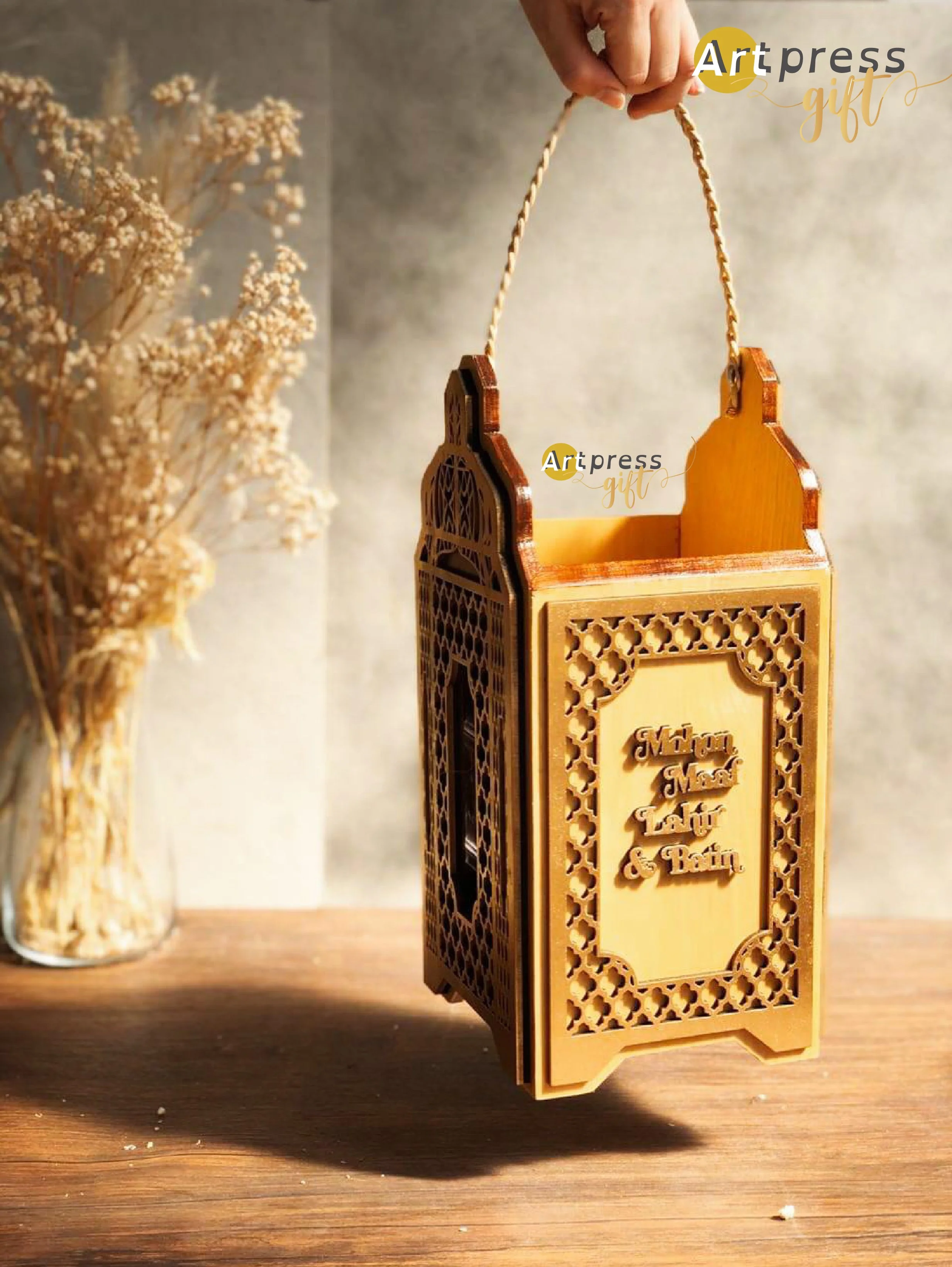
Eid Hampers 2020 Edition "Lantern"
The Lantern design is inspired by the Fanoos Lantern, a symbolic Ramadan lamp originating from Egypt. The Fanoos holds a special place in the hearts of Egyptians, as it is closely associated with the joy and celebration that marks the arrival of Ramadan.
Today, Fanoos Lanterns are widely used as Ramadan décor in shopping centers, malls, hotels, and various public spaces.
-
![A wooden decorative lantern with intricate cut-out patterns and the words "Mantra, Makt, Lassi, & Bati" on the front, hanging by a rope. A glass vase with dried flowers is on the left side of the table.]()
-
![A hand with a gold watch pouring honey or syrup from a jar into a stack of cookies in a glass container, placed on a wooden stand with the text 'Selamet idu fim' engraved on it, next to a vase with dried flowers.]()
-
![Hand holding a decorative wooden lantern with intricate cut-out patterns, placed on a wooden surface with a blurred vase of dried flowers in the background.]()